Posts

Showing posts with the label Information And Communication Technology

The Chemical Revolution: How AI is Reshaping the Industry Landscape

Image
  Artificial Intelligence (AI) in Chemical In recent years, the integration of Artificial Intelligence (AI) into the field of chemistry has sparked a revolution, fundamentally transforming the way chemical research, development, and manufacturing are conducted. Accelerating Drug Discovery: One of the most significant contributions of Artificial Intelligence (AI) in Chemical is its ability to expedite drug discovery processes. AI-driven algorithms can analyze vast amounts of chemical and biological data to identify potential drug candidates with greater accuracy and efficiency than traditional methods. By predicting molecular properties, optimizing compound synthesis, and simulating drug interactions, AI accelerates the drug discovery pipeline, leading to faster development of novel therapeutics for various diseases. Predictive Modeling and Optimization: AI-powered predictive modeling techniques enable chemists to optimize chemical reactions and processes, maximizing yield, eff...

RF Shielded Test Enclosures - Essential for Accurate EMC Testing

Image
RF Shielded Test Enclosures With the proliferation of wireless technology, reliable testing of wireless devices has become extremely important. RF shielded test enclosures play a crucial role in isolating wireless devices from external electromagnetic interference during testing. Need for RF Shielding Electromagnetic interference is one of the major challenges faced during wireless testing. External RF signals from sources like mobile networks, WiFi networks, radio/TV broadcasts can interfere with the signals used for testing wireless devices. This leads to inaccurate and inconsistent test results. RF shielded test enclosures provide a controlled electromagnetic environment by blocking external interference. This ensures accurate characterization of device performance and reliability of test data. With stricter wireless certifications and demand for higher quality, RF shielding during wireless testing has become indispensable. Types of RF Shielding Materials Various materials are used...

Fermenter Market: Navigating Growth Trends and Challenges

Image
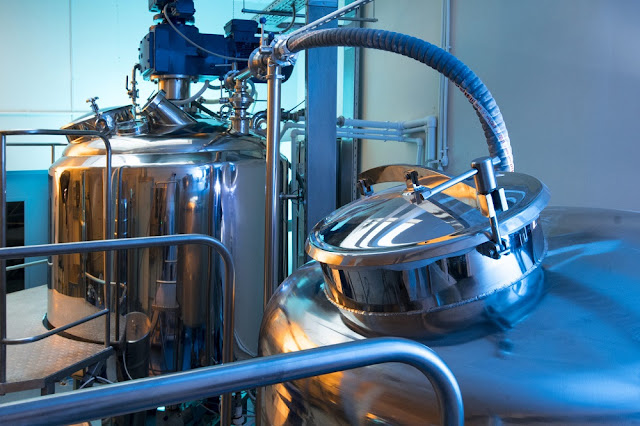
  Fermenter Market The Fermenter Market is experiencing a notable surge, driven by various factors propelling its expansion. From advancements in biotechnology to the rising demand for fermented products across industries, the market is witnessing a significant upswing. As fermentation processes become increasingly integral to various sectors, the fermenter market stands poised for substantial growth. The Global Fermenter Market Demand is estimated to be valued at USD 1.98 Bn in 2024 and is expected to reach USD 3.37 Bn by 2031, growing at a compound annual growth rate (CAGR) of 7.9% from 2024 to 2031. The Key Players Fermenter Market for are DSM N. V., GEA GROUP, ALFA LAVAL AB, BASF SE, JBT CORPORATION, CHR. HANSEN HOLDINGS A/S , Biotree, Uma Pharmatech Machinery, Amerging Technologies, DIOSNA Dierks & Söhne GmbH, Pierre Guerin SA, OMVE, SYSBIOTECH GmbH, Shree Biocare Solutions Private Limited, and Borg Scientific Market Drivers Several key drivers are fueling the gro...

Energy Harvesting Systems: A Sustainable Approach to Powering the Future

Image
Energy Harvesting Systems  Energy harvesting, also known as power harvesting or energy scavenging, is the process by which energy is derived from external sources (such as solar power, thermal energy, wind energy, salinity gradients, and kinetic energy), captured and stored for small, wireless autonomous devices, like those used in wearable electronics and wireless sensor networks. History and Development of Energy Harvesting The earliest research on energy harvesting can be traced back to the 1990s when scientists first began investigating techniques to convert ambient energy like movement, light and heat into usable electricity for powering portable electronics. Since then, substantial advancements have been made in areas like piezoelectric, electrodynamic and thermoelectric energy harvesting technologies. Some key developments include Michael Allen's invention of the thermoelectric energy harvesting wristwatch in 1992 and product launches like the EPFL shoe inserts that harvest...

Aerostat System: Unmanned High Altitude Airships for Persistent Surveillance

Image
  Aerostat System Aerostats, commonly known as airships or blimps, are tethered or moored lighter-than-air aircrafts that obtain their buoyancy from contained lifting gases less dense than the surrounding air. Unlike free balloons, aerostats are steerable and have propulsion systems that allow controlled flight. Modern aerostats can stay aloft from several days to months depending on their size and payload. They are being used for various commercial, scientific and military applications that require persistent presence in the air without the need for runways. Aerostat Technology Aerostats System employ helium or hydrogen as the lifting gas to achieve buoyancy. The outer covering material of the aerostat is generally made from durable, multi-layered synthetic fabrics like polyester or polyurethane coated with reflective metallic surfaces to provide strength as well as reflect sunlight. The gas containment system utilizes a series of valves, sensors and seals to carefully manage t...

Fumed Silica: A Versatile Industrial Material

Image
  Fumed Silica What is Fumed Silica? Fumed silica, also known as pyrogenic silica, is an ultra-fine, high-purity silicon dioxide produced by flame hydrolysis of silicium tetrachloride gas in an oxygen-hydrogen flame. The result is aggregates of crystalline silica, whose very fine particle size gives it a number of distinctive properties: fumed silica has a large specific surface area, up to 400 m2/g; it is white, fluffy, and non-abrasive; and it is chemically inert and permanent. Formation and Properties The flame hydrolysis process produces primary particles in the range of 7-40 nanometers that cluster into aggregates 50-200 nanometers in size. The large specific surface area of fumed silica gives it unique behavior as a rheology modifier, thickening agent, reinforcing filler, absorbent, and anticaking agent. The aggregates are highly porous, leading to low bulk density around 30 kg/m3. Fumed silica is chemically similar to naturally occurring crystalline silica but distinct in i...

Energy Harvesting Systems: Turning Minor Motions and Ambient Energy into Electricity

Image
Energy Harvesting Systems  Introduction to Energy Harvesting Energy harvesting, also known as power harvesting or energy scavenging, is the process by which energy is derived from external sources (e.g., solar power, thermal energy, wind energy, salinity gradients, and kinetic energy), captured, and stored for small, wireless autonomous devices, sometimes without batteries. Energy harvesting devices can operate permanently without maintenance or replacement by converting ambient sources into electric power. They provide alternatives to conventional power sources like batteries which have limited lifetimes and require replacement or recharging, which can be inconvenient or impossible for small, inaccessible devices. Types of Energy Harvesting Vibration Energy Harvesting Vibration energy harvesting utilizes kinetic energy from vibration or minor motions to power electronic devices. Piezoelectric and electromagnetic technologies are commonly used to convert mechanical energy from v...

Cyber Security Insurance: An Essential Protection for Businesses in Today's Digital World

Image
Cyber Security Insurance With the growing reliance of businesses on technology and the internet, the risk of cyber attacks and data breaches have increased manifold. Cyber criminals are finding newer ways every day to exploit vulnerabilities and steal sensitive data. While investments in cyber security tools and training staff can help mitigate risks to some extent, the financial impact of a successful cyber attack can devastating for companies. This is where cyber security insurance comes into play as an important risk transfer mechanism. Rise of Sophisticated Cyber Threats Cyber attacks have become more frequent, complex and damaging in recent years. Hackers use advanced techniques like ransomware, phishing scams and targeted malware to breach corporate networks. According to reports, ransomware attacks alone caused over $20 billion in damages globally in 2021. Large corporates too haven't remained untouched, with high profile incidents like the SolarWinds hack impacting thousan...

Cloud Native Software: The Future of Application Development

Image
  Cloud Native Software Introduction Software development is continually evolving with new paradigms and technologies emerging regularly. One shift that has gained significant momentum in recent years is the rise of cloud native software. By taking advantage of cloud computing capabilities, cloud native approaches are transforming how applications are built, deployed and managed.   What is Cloud Native Software? Cloud Native Software refers to applications that are built using cloud design patterns and leveraging the scalable infrastructure and services provided by modern cloud platforms like AWS, Azure and GCP. Rather than simply taking existing monolithic applications and moving them to the cloud, cloud native applications are designed from the ground up to fully utilize the elastic capabilities of cloud environments. Some key characteristics that define cloud native applications include: - Microservices Architecture: Software is broken into independently deployable m...

Emerging Technology: The Rise of Neuromorphic Chips

Image
Neuromorphic Chips   The field of computing is evolving at a rapid pace, with new technologies emerging all the time that promise to revolutionize how we interact with machines. One area that has captured the interest of researchers worldwide is neuromorphic engineering - an interdisciplinary field that takes inspiration from neuroscience to design novel computing systems known as neuromorphic chips. These groundbreaking chips are modeled after the human brain and could transform everything from robotics to artificial intelligence. What are Neuromorphic Chips? Neuromorphic Chips , also referred to as artificial neural networks, are circuits designed to function like the human brain. Unlike conventional computer processors that follow a sequential fetch-execute cycle, neuromorphic chips comprise many simple but highly interconnected processing elements that operate in parallel, similar to biological neurons. These neural networks are non-von Neumann architectures that mimic ...

LED Work Lights - The Future of Task Lighting

Image
  LED Work Lights Work lights have come a long way from the traditional incandescent bulbs of the past. Thanks to advances in LED technology, work lights today are more energy efficient, durable, and provide superior light quality compared to older bulb types. What are LED Work Lights? LED work lights, sometimes called task lights, are portable lights powered by light-emitting diode (LED) bulbs that provide illumination for work areas, workshops, garages and more. LEDs have several advantages over traditional incandescent and halogen bulbs that make them ideal for work lighting applications: Energy Efficiency LEDs use up to 90% less energy than incandescent bulbs to produce the same amount of light. For work lights that may be left on for hours at a time, the energy savings really add up over time. LEDs also last 35-50 times longer than incandescent bulbs, saving users replacement costs down the road. Durability LEDs contain no fragile filaments like incandescent bulbs. Their so...

Rise of eSports - A New Era of Competition

Image
eSports   eSports has seen exponential growth over the past decade emerging as a billion dollar industry. With large tournament prize pools and millions of viewers, competitive video gaming has paved a path of its own to reach new heights. Beginnings of eSports The origins of eSports can be traced back to the 1970s when computer space tournaments were organized. However, it was not until the 1990s that eSports began to take off with the rise of multiplayer video games. Some of the early landmark events included the first international StarCraft tournament in Korea in 1996 and QuakeCon Doom tournaments starting in 1997 held in the US. Major gaming titles like StarCraft, Warcraft III, and Counter-Strike dominated the competitive scene attracting enthusiastic gamers and small live audiences. Rise of Major Tournaments With growing interest, prize pools at tournaments steadily increased throughout the 2000s. In 2011, the first League of Legends World Championship was held with ...