Posts

Showing posts with the label Polymers and Resins

Soundproofing the World: Exploring Global Acoustic Insulation Trends
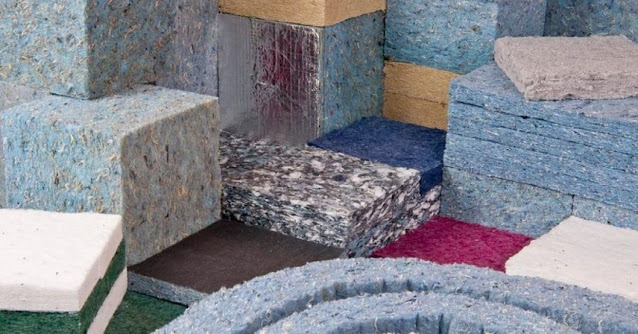
Image
  Global Acoustic Insulation In a world that's increasingly filled with noise, the demand for effective acoustic insulation solutions is on the rise. From bustling urban centers to serene rural landscapes, the need to create quieter environments is a universal concern. Let's delve into the fascinating realm of global acoustic insulation trends and explore the key points shaping this essential industry. Technological Advancements: The field of acoustic insulation has witnessed remarkable advancements in recent years. Engineers and researchers around the world are developing innovative materials and techniques to effectively dampen sound transmission. From traditional solutions like fiberglass and mineral wool to cutting-edge materials such as aerogels and acoustic membranes, the options for soundproofing have never been more diverse. Sustainable Solutions: With sustainability becoming a top priority across industries, the Global Acoustic Insulation Sector is no exception. M...

PEDOT: A Revolutionary Conducting Polymer

Image
PEDOT  Introduction Poly(3,4-ethylenedioxythiophene), commonly known as PEDOT, is a fascinating conducting polymer that has been a subject of extensive research over the past few decades. With its unique properties, PEDOT holds tremendous potential for applications across diverse fields ranging from electronic devices to biomedical technologies. Chemical Structure and Properties PEDOT is a thiophene-based polymer which in its oxidized state exists as polythiophene cation with a positively charged backbone. It has a monomer unit consisting of 3,4-ethylenedioxythiophene (EDOT) which provides solubility and processability due to polar ethylene dioxy groups. The presence of these side groups helps to overcome aggregation issues commonly seen in conducting polymers. The backbone of PEDOT can adopt planar and rigid conformations enabling high carrier mobility. It has a low band gap of around 1.5 eV which makes it highly conductive even at low doping levels. PEDOT displays good envi...

The Growing Need for Recycled Plastics

Image
Recycled Plastics   As plastic pollution continues to damage our environment, the need for effective plastic recycling has never been greater. Recycled plastics play a vital role in reducing plastic waste and creating a more sustainable future. Plastic Waste Crisis Plastic production has increased dramatically over the past decades. In 1960, global plastic production was around 15 million metric tons per year. By 2015, this figure had risen to around 350 million tons annually and is projected to double again by 2050. Much of this plastic ends up as waste. Only a fraction of the plastic produced is recycled. Most plastic items are designed for single-use and then discarded. Much of this waste ends up polluting land and oceans. According to experts, there could be more plastic than fish in the oceans by weight by 2050 if production continues at current rates without improvements in waste management. Microplastics from plastic waste are even invading the food chain and entering ...

Polyvinylidene Fluoride: A Versatile Fluoropolymer Material

Image
Polyvinylidene Fluoride Polyvinylidene Fluoride (PVDF) is a semi-crystalline thermoplastic fluoropolymer produced by the polymerization of vinylidene difluoride. PVDF exhibits excellent resistance to corrosion, abrasion, and chemical attack along with inherent properties such as lightweight, weatherability and toughness. These qualities have enabled PVDF to find widespread usage in a variety of applications from coatings to advanced filtration membranes. Physical and Chemical Properties PVDF is a white resilient solid with a density of about 1.78 g/cm3. It displays outstanding chemical resistance towards corrosion from bases, acids and oxidizing agents. PVDF has excellent resistance to ultraviolet and weathering degradation as well. The polymer does not melt but softens gradually above 150°C and can be readily processed by methods like melt pressing or melt molding. PVDF has a monomer unit composed of one carbon and two fluorine atoms in a –CH2-CF2- repeating structure which gives ris...