Posts

Showing posts with the label Specialty And Fine Chemicals

Innovations in Action: Spotlight on Global Alcohol Ethoxylates

Image
Global Alcohol Ethoxylates   In the realm of chemical innovation, one compound stands out for its versatility and widespread applications: alcohol ethoxylates. These compounds, derived from ethylene oxide and alcohol, play a crucial role in various industries, from household cleaning products to industrial processes.   Versatile Surfactants: Alcohol ethoxylates serve as surfactants, substances that lower the surface tension between two liquids or between a liquid and a solid. This property makes them invaluable in a wide range of applications, including detergents, emulsifiers, wetting agents, and foaming agents. Whether it's in laundry detergents, dishwashing liquids, or personal care products, alcohol ethoxylates contribute to effective cleaning and formulation stability.   Environmentally Friendly Formulations: One of the key advantages of Global Alcohol Ethoxylates is their biodegradability, making them a preferred choice for environmentally conscious consumers a...
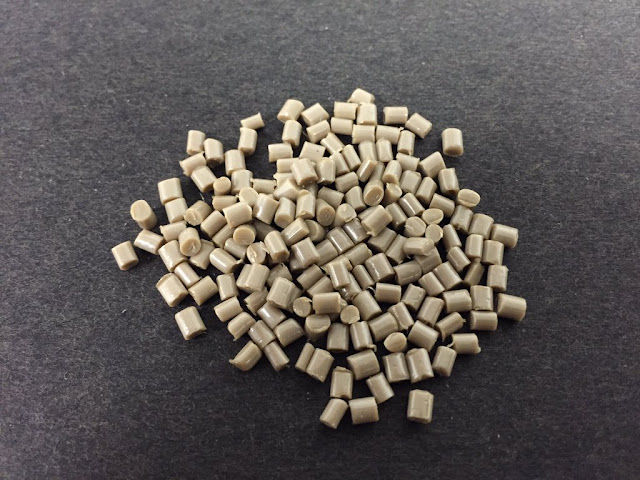
Polyether Ether Ketone: A High-Performance Engineering Thermoplastic

Image
  Polyether Ether Ketone Polyether ether ketone, commonly known as PEEK, is a semi-crystalline thermoplastic belonging to the polyaryletherketone (PAEK) family. PEEK polymer was first developed in the late 1970s as an alternative to metal in applications requiring high strength, rigidity and toughness at elevated temperatures. It has excellent mechanical and chemical resistance properties which make it suitable for use in demanding environments. Physical Properties of PEEK Polyether Ether Ketone (PEEK)  is known for its high strength, stiffness and toughness even at elevated temperatures. Some key physical properties of PEEK include: - Density: 1.3 g/cm3, making it one of the lightest high performance polymers. This property aids in weight reduction for parts. - Melting Point: 343°C. PEEK retains its mechanical integrity up to 260°C and can withstand short term peak temperatures up to 300°C. - Glass Transition Temperature (Tg): Between 143°C to 150°C. Above this tempera...

PET Preforms - The Building Blocks of Bottled Beverages

Image
PET Preforms  Introduction PET, or Polyethylene Terephthalate, has become one of the most widely used plastic polymers for packaging applications worldwide. A key component manufactured from PET is the PET preform - the embryonic bottles used in the blow molding process to create finished PET bottles. What are PET Preforms? PET preforms are small, hollow shapes made by injection molding PET resin pellets. They resemble test tubes with an open mouth on one end and a closed bottom. PET preforms serve as the uninflated starting point for making finished PET bottles through stretch blow molding. The preforms are first heated and then air is injected to expand them inside a mold, forming the shape of the finished bottle. Common bottle sizes like 20 oz, 1 liter and 2 liter are all made from PET preforms in this process. Manufacturing PET Preforms The production of PET Preforms involves injection molding machinery capable of melting PET resin pellets and injecting the molten material i...

The Chlor-Alkali Industry: A backbone of modern chemistry

Image
  Chlor-Alkali  The chlor-alkali industry is one of the foundational industries that has played a key role in the modern chemical industry. It uses electrolysis to produce chlorine, sodium hydroxide, and hydrogen from brine and salt water. These three commodity chemicals find applications across numerous industries from paints and plastics to pharmaceuticals and water treatment. In this article, we explore the chlor-alkali industry in depth looking at its history, production processes, major products and their end uses as well as the future outlook for this industry. A brief history The Chlor-Alkali industry is over 150 years old with the first commercial production starting in the 1850s. Early production utilized the mercury cell process where brine was electrolyzed between a mercury cathode and graphite anode. This process dominated production for over a century. However, environmental concerns around mercury emissions led to the gradual replacement of mercury cells with n...