Posts

Showing posts with the label Advanced Materials

Protect and Serve in Style: The Importance of Law Enforcement Uniforms

Image
Law Enforcement and Military Clothing  Law enforcement uniforms are not merely outfits; they are symbols of authority, professionalism, and unity. In the world of law enforcement, clothing serves a multifaceted purpose beyond just covering the body. It communicates identity, fosters camaraderie among officers, and plays a crucial role in public perception. Similarly, military clothing is designed not only for practicality but also to instill a sense of belonging and purpose among servicemen and women. 1. Identity and Authority Law enforcement uniforms serve as a visual representation of authority. The distinct design and insignias instantly identify officers, ensuring public safety and order. When citizens see a uniformed officer, they know they can turn to them for help and protection. Likewise, military uniforms signify the commitment of service members to defend their country and uphold its values. 2. Professionalism and Unity Uniforms promote professionalism and cohesio...

Thermal Interface Materials: Enabling Heat Dissipation in Electronics

Image
Thermal Interface Materials  The continuous evolution and miniaturization of electronic devices has pushed the limits of heat dissipation and thermal management. As component density increases and sizes decrease, excess heat generated during operation poses serious risks if not transported out efficiently. This is where thermal interface materials play a vital role by facilitating heat transfer between components. What are Thermal Interface Materials? Thermal interface materials (TIMs) refer to any material designed to fill air gaps and promote thermal conduction between two solid surfaces. They provide a thermally conductive path to draw heat away from heat generating sources like processors, graphics cards, and power delivery components to heat sinks and heat exchangers. Without a proper TIM, the air gaps act as an insulator reducing heat transfer drastically. Common TIMs include greases, gap pads, phase change materials, and thermally conductive adhesives. Importance of T...

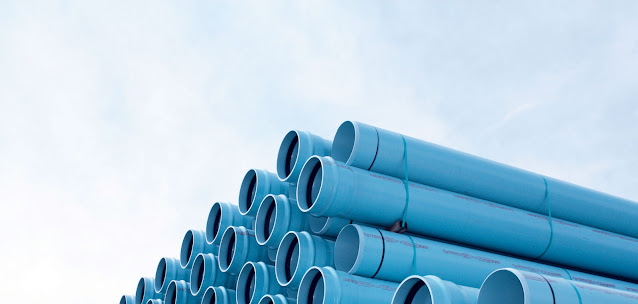
The Versatile Applications of PVC Pipes in Construction Industry

Image
  PVC Pipes Material and Properties Polyvinyl chloride, commonly abbreviated as PVC, is a thermoplastic polymer which forms the basic raw material used in making PVC pipes. PVC resins are produced by polymerizing vinyl chloride monomer. PVC pipes have a variety of desirable properties which make them suitable for diverse applications. They are lightweight, durable, corrosion resistant and easy to install. Being thermoplastic in nature, PVC can be easily joined by solvent welding or other joining techniques. The material is non-toxic and does not support microbial growth, making PVC pipes hygienic for potable water supply applications. PVC pipes have high tensile and impact strength combined with flexibility, thus allowing them to withstand pressures and impacts. They are cost effective and available in different grades suitable for diverse applications. Usage in Plumbing Systems PVC Pipes are extensively used in domestic, commercial and industrial plumbing systems for applicati...

Metal Roofing: The Premium Choice for Your Home

Image
Metal Roofing  Metal roofing has been growing in popularity for residential homes in recent years. With advancements in metal roofing technologies and aesthetics, it has become a premium choice for both new construction and roof replacement projects. Metal roofing offers unmatched durability, low maintenance requirements, energy efficiency, and variety of styles that integrate seamlessly into any architectural design. Types of Metal Roofing  There are different types of Metal Roofing available in the market depending on the metal used and manufacturing process. The two most common types are: Steel Roofing: Steel is the most widely used metal for roofing due to its cost effectiveness. Galvanized steel provides optimum corrosion resistance through a zinc coating applied during manufacturing. Galvalume steel improves upon galvanized through an aluminum-zinc alloy coating for further protection against rust. Both galvanized and galvalume steel roofs can last 50 years or longer wit...

Feldspar: An Important Industrial Mineral

Image
Feldspar  Feldspar is a group of rock-forming tectosilicate minerals that make up about 41% of the Earth's continental crust by weight. Feldspars crystallize from magma as veins or masses in both intrusive and extrusive igneous rocks. They also form in low-grade metamorphic rocks through the gradual alteration of pre-existing igneous rocks. Commonly off-white to gray or pink in color, feldspars are an essential constituent in the majority of felsic igneous rocks. Forms and Composition Feldspar s belong to a solid solution series between albite (NaAlSi3O8) and anorthite (CaAl2Si2O8) end members. Based on the predominant alkali/alkaline earth metal composition, feldspars are divided into two main categories - plagioclase and potassium feldspar. Plagioclase, containing sodium, calcium and traces of potassium, makes up ~90% of igneous rocks worldwide. Sanidine and orthoclase are the most common potassium feldspars rich in potassium. The varied chemical composition of feldspars allows...

Thermal Insulation Materials: Reducing Energy Usage through Efficient Insulation

Image
  Thermal Insulation Materials Building insulation plays a vital role in keeping our living and working spaces comfortable while reducing energy costs. With proper insulation, heat flow into or out of a building can be significantly reduced, allowing for more effective temperature control with less energy use. Types of Thermal Insulation Materials There are several different Thermal Insulation Materials types that each have their own advantages depending on the intended application. Understanding the key differences between them can help builders, contractors and homeowners choose the optimal solution. Fiberglass Insulation Fiberglass remains one of the most widely used insulation materials due to its affordability and effectiveness. Fiberglass insulation is made from extremely fine fibers of glass and is sprayed or blown into attics, walls and floor cavities during new construction. It provides excellent resistance to heat transfer with R-values typically ranging from R-3 to R-...